
The page does not prove that the buried person was a warrior.
Debated. The mace and other weapons are read as signs of high rank, but the bones have not been fully studied.
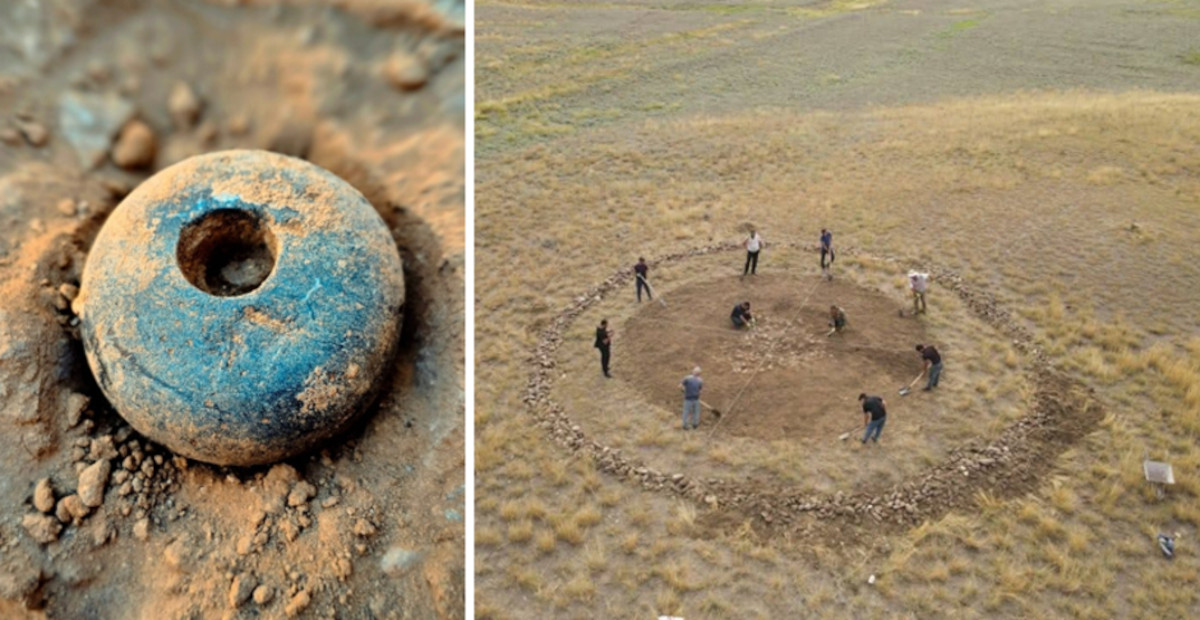
The grave is Kurgan No. 4 in the Sariyokhus Valley, in western Azerbaijan. Scientists place it in the 17th or 16th century BC, and they call that date provisional. The mound is about 12 metres across. Inside were a polished stone mace head, a bronze dagger, a bronze knife, ceramics, and arrowheads of flint and obsidian. The mace is diorite and weighs about 400 to 500 grams, with a hole for a handle. Parts of a quiver were found as well.
A full study of the bones, and radiocarbon dates, are still planned.
https://www.ancient-origins.net/news-history-archaeology/bronze-age-mace-burial-ajerbaijan-00103172