
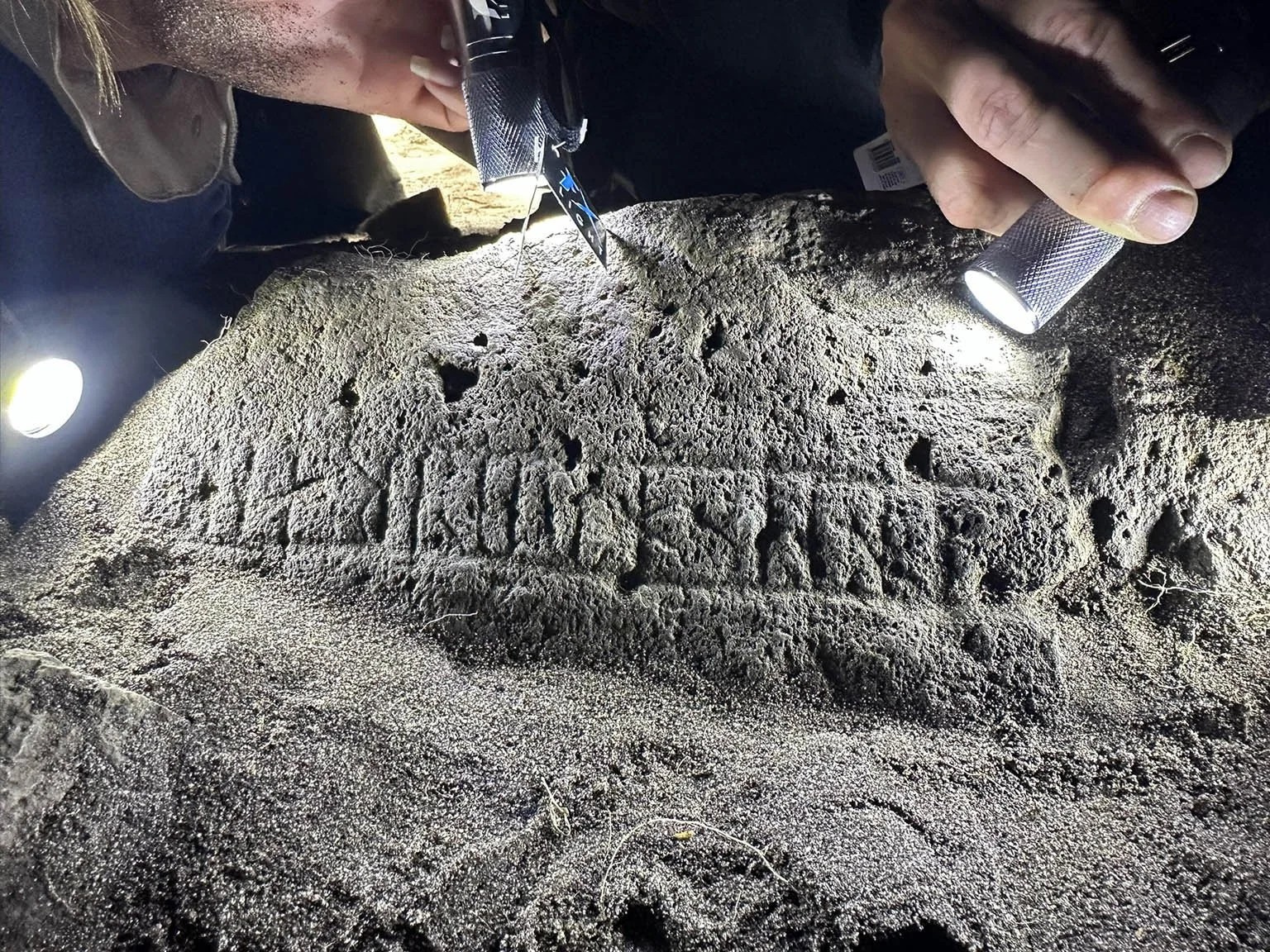
A chapel is not proved. The stone was built into the floor of a small building.
Debated. An early reading may mean the runes mark a resting place, but that reading is only a start.
The stone was found at Á Sondum, in Sandur, on the island of Sandoy, in the Faroe Islands. The page gives no firm age for the stone. The building may be medieval. It faces east to west, with the door at the west, like other small prayer houses. Near the stone were pieces of a small statue of Mary holding the Christ Child, and a small lamp that burned fat or oil.
The page says it is still not known whether the stone marked a grave, had another use, or was only reused as a floor stone.
https://www.ancient-origins.net/news-history-archaeology/rare-runestone-discovered-00103072