
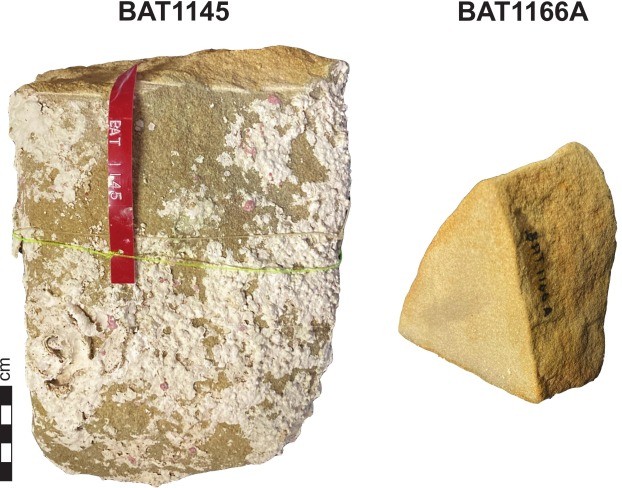
Known. The ship Batavia sank with carved sandstone blocks in its hold.
The wreck lies at Morning Reef, by the Houtman Abrolhos Islands, off Western Australia. The ship left the Netherlands on 29 October 1628. It hit the reef on 4 June 1629. The blocks were likely meant for a gateway in Batavia, then the Dutch capital in what is now Indonesia. Tiny mineral grains in the stone show that blocks which look alike came from at least two quarry areas in what is now Germany. They were gathered into one cargo and sent halfway round the world. The wreck also held thousands of bricks and other building stone. The wreck was first found in 1963.
Old shipping lists are incomplete, so the team plans to test more stones against more European quarries.
https://www.ancient-origins.net/news-history-archaeology/400-year-old-shipwreck-00103046