
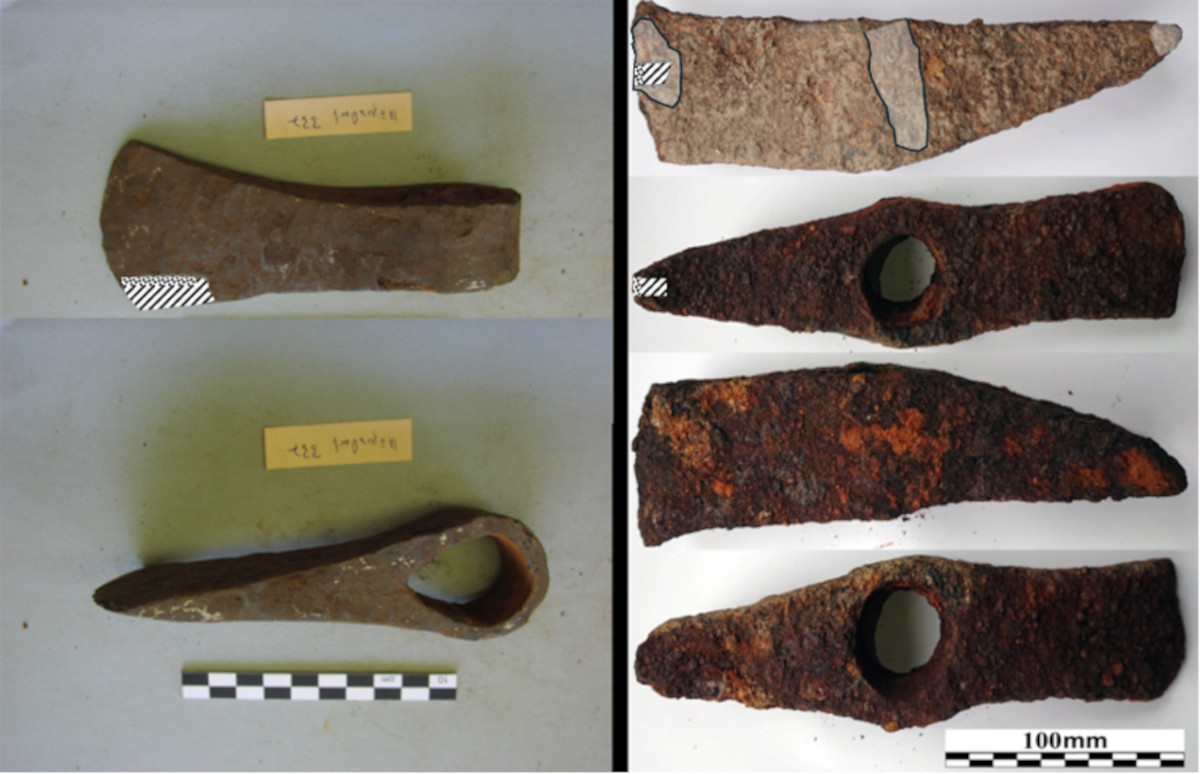
Known. Two Iron Age axes, found far apart, were made in different ways.
One axe, the Kyzylzhartas axe-adze, came from a burial mound in the Karaganda region of Kazakhstan. Tests place it between 357 and 166 BC. The other, the Högersdorf axe, was found near Bad Segeberg in northern Germany. Its dates fall between 480 and 211 BC. The two places are nearly 3,000 miles apart. The Kazakhstan axe used softer iron near the handle and harder, carbon-rich iron on the cutting edge. That edge was heated to make it stronger. The German axe was softer iron, rich in phosphorus, most likely from local bog ore.
The Kazakhstan axe may have been left in the mound long after that grave was first used. The page says two axes are only a small sample.