
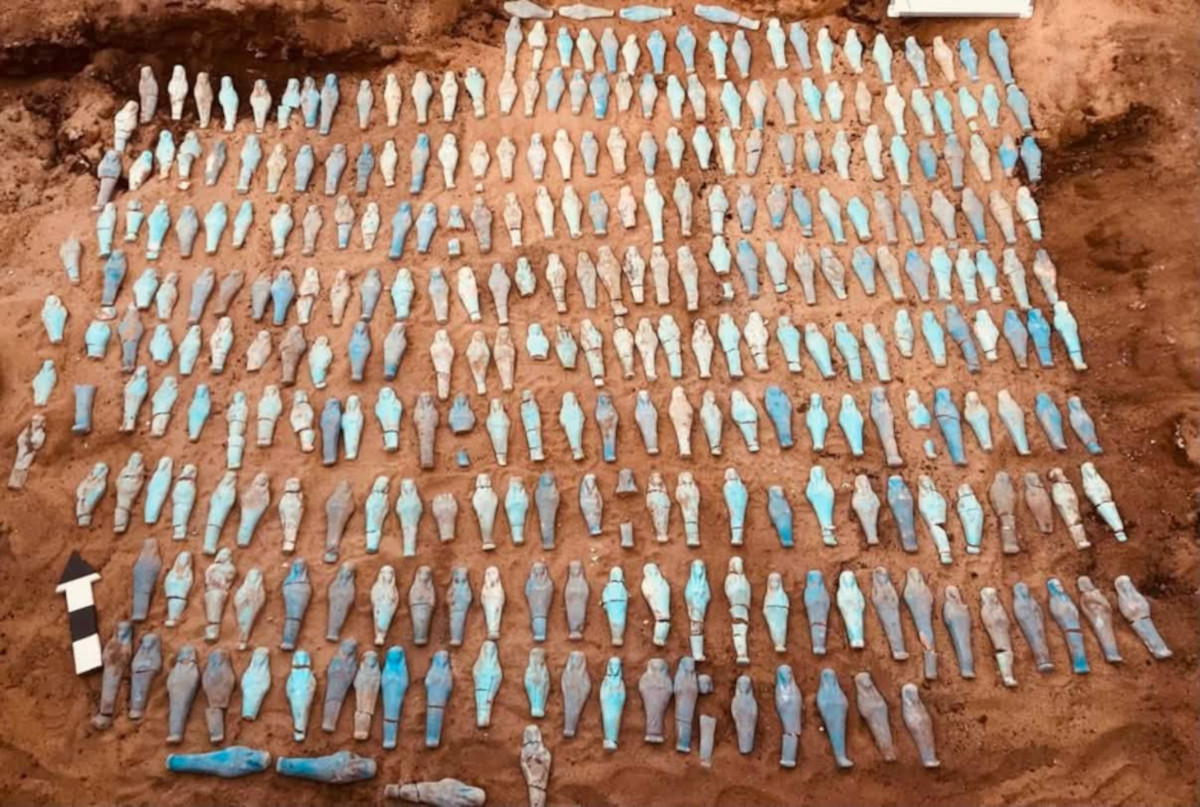
Known. One burial room held 560 small servant figures.
The tomb is at Tell Quesna, in Menoufia, Egypt. It dates to the Late Period and the Greco-Roman age. The figures are made of faience. They are ushabti statues, meant to serve the dead in the next life. Some carry lines from the Book of the Dead. The tomb has a central hall and burial rooms joined by vaulted doorways. Bodies were laid in the pose linked with Osiris, and they survive in different states. Other finds include stone amulets, such as the Eye of Horus, and a pot from the Greek island of Rhodes with a maker's name stamped on the handle.
Pots were set under one person's arms, and another vessel between the thighs. The page says those burials are still being studied.
https://www.ancient-origins.net/news-history-archaeology/quesna-ushabti-figurines-00103011