
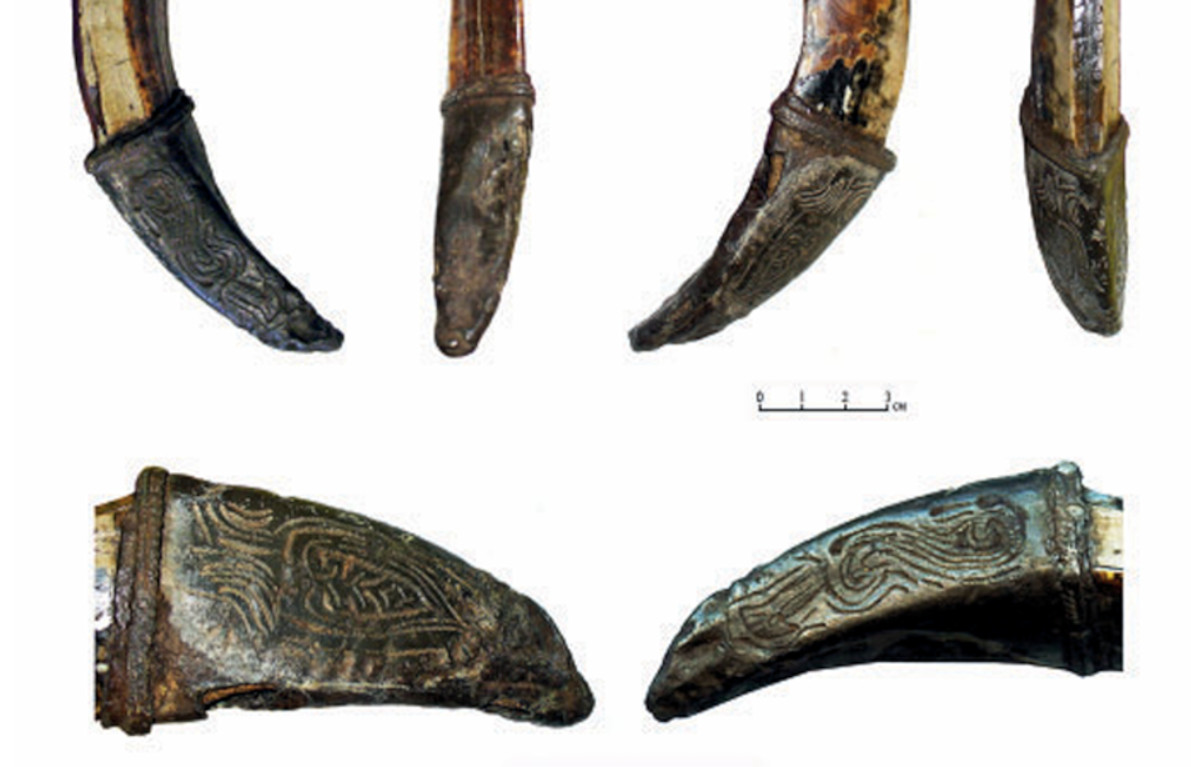
No one has proved that this tusk was a charm.
Debated. It may have been a charm, or a hunting prize.
The tusk was found at Troitsky XVI, in Veliky Novgorod, Russia. It dates to the 12th century. The page also places a boar-tusk piece like this in the late 12th or early 13th century. The tusk is almost 10 centimetres long and more than 2.8 centimetres wide. It came from a wild boar older than eight years, which weighed more than 220 pounds. A metal mount covers the tip and is engraved. It looks bright, like silver, but tests show it is a mix of tin and lead. The findspot was a part of the town where wealthy landowners lived.
Some experts guess a link with Scandinavian myth, but the page says that meaning may already have changed in this Christian city.
https://www.ancient-origins.net/news-history-archaeology/wild-boar-tusk-amulet-00103006