
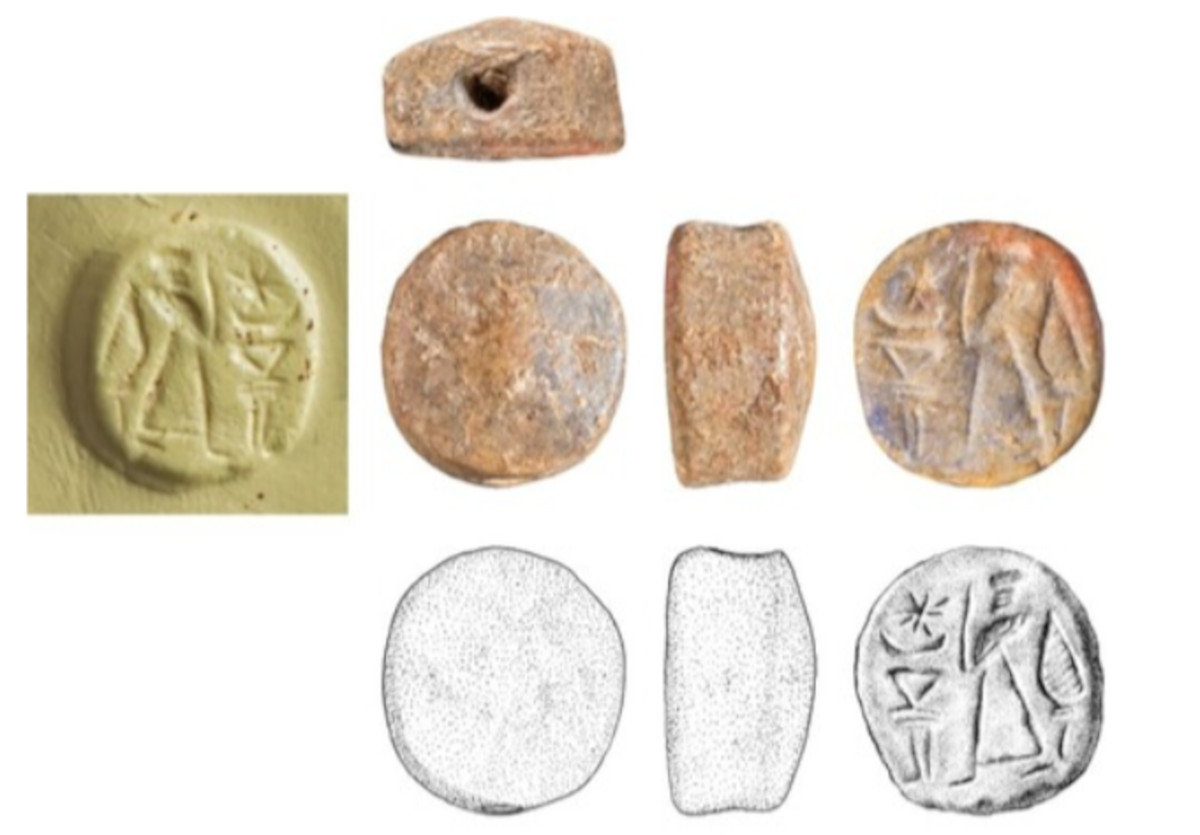
Known. A tiny stone seal shows a man, a moon, and a star.
The seal was found at Tel Yavne, in a potters' workshop, not in a temple. It dates to the seventh century BC. It is 14.6 millimetres long, 13.2 millimetres wide, and 8 millimetres high. It is reddish limestone, with a hole through it, so it may have hung as a pendant. A bearded man in a long robe raises one hand. In front of him are a stand, a crescent moon, and an eight-pointed star. A tree stands to his side. The page links the moon and star to the moon god Sin and to a goddess tied to the planet Venus.
The page does not prove who lost the seal. Nearby tombs may belong to people moved from Mesopotamia, or to people tied to Assyrian rule.
https://www.ancient-origins.net/news-history-archaeology/yavne-seal-reveals-astral-worship-00102969