
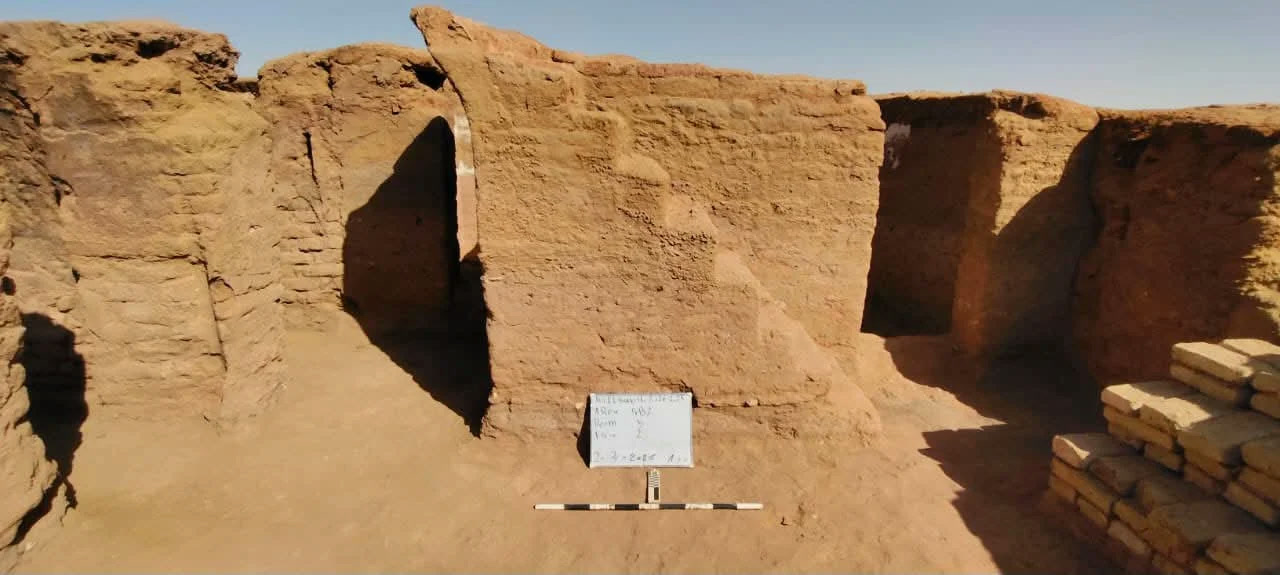
Known. A buried town was uncovered under the desert sand.
The town is at Ain Al-Sabil, in the Dakhla Oasis, in Egypt's Western Desert. It is a fourth-century settlement that lay buried for about 1,600 years. Diggers found crossing streets, open squares, a central church, thick walls, and two watchtowers. Homes had large halls, vaulted ceilings, bread ovens, and places to grind grain. One house belonged to a church deacon named Tisus, and dates to the second half of the fourth century AD. The house of Tapibos was used as a church before the basilica was built. About 200 pieces of pottery carry writing in Coptic and Greek. Bronze coins show Byzantine emperors. Gold coins date to Constantius II, who ruled from 337 to 361 AD.
The page does not say what is still argued.