
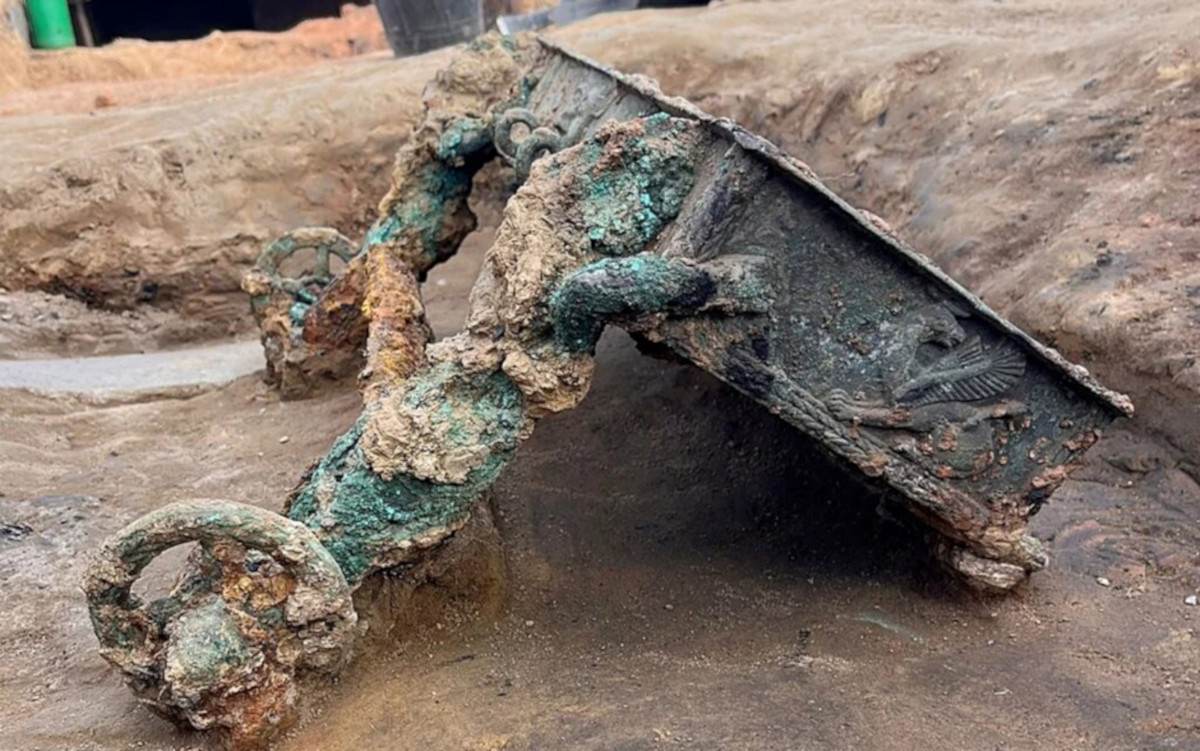
The whole chariot was not found. Only part of it remains.
Known. The pieces are from a bronze ceremonial chariot of Tartessos.
They were found at Casas del Turuñuelo, in Guareña, Spain, in a corridor next to an altar shaped like a bull's hide. They date to the 5th century BC, about 2,500 years ago. Two wheels remain, with one axle and the inner rim of one wheel. The sides show griffins, with a lion's body and an eagle's head and wings. At the front is a horned face that researchers call Achelous, a river god, with its tongue sticking out. Two bearded men seem to hold up the box. The chariot lay beside a hall for feasts. Other finds include fine pots from Attica, in Greece, an Egyptian alabaster jar, and carved ivory.
The page says the chariot may come from Etruscan Italy, or follow that style. Why the building was closed and buried at the end of the 5th century BC is still unexplained.
https://www.ancient-origins.net/news-history-archaeology/tartessian-bronze-chariot-00102925